Our Quality & Reliability Management Services
Our Quality and Reliability Management Consulting Services help organizations build robust, efficient, and customer-focused operations that consistently deliver high-quality products and services. We combine proven methodologies such as Lean Management, Six Sigma, and the Theory of Constraints (TOC) to identify waste, reduce variation, eliminate recurring problems, improve process capability, and strengthen operational reliability.
Our approach integrates quality systems, process improvement, root-cause analysis, reliability engineering, performance measurement, and continuous improvement. We work with organizations to establish sustainable management systems rather than focusing only on short-term corrective actions. By connecting people, processes, technology, and performance data, our consultants help clients reduce defects and failures, improve productivity, shorten lead times, optimize resources, increase customer satisfaction, and develop a culture of continuous improvement and operational excellence.
Lean Management & Operational Excellence
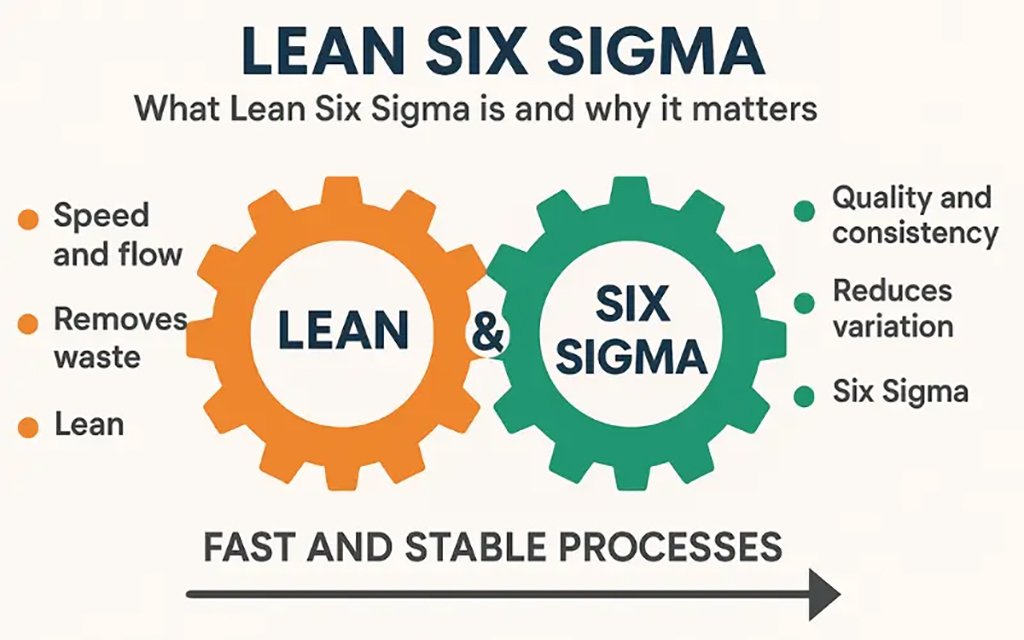
We help organizations identify and eliminate activities that do not create value for customers while improving process flow and operational efficiency.
- Conduct Value Stream Mapping (VSM) to visualize end-to-end processes and identify waste, bottlenecks, delays, and non-value-added activities.
- Apply Lean principles such as 5S, Kaizen, Standard Work, Visual Management, JIT, Kanban, and mistake-proofing (Poka-Yoke).
- Identify and reduce the 8 forms of waste (TIMWOODS): transportation, inventory, motion, waiting, overproduction, over-processing, defects, and underutilized talent.
- Establish continuous improvement systems involving employees through Kaizen events and structured improvement initiatives.
- Develop Lean performance dashboards using indicators such as lead time, cycle time, productivity, OEE, first-pass yield, and waste levels.
Six Sigma & Process Improvement
We use Six Sigma to reduce process variation, prevent defects, and improve consistency through structured, data-driven problem solving.
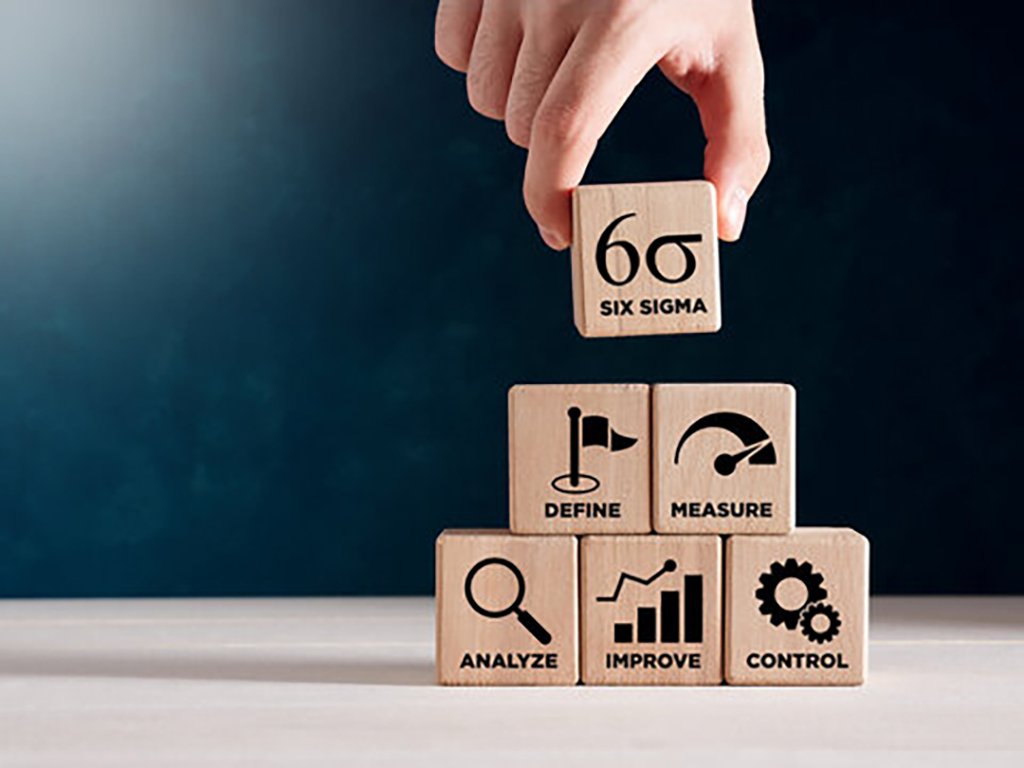
- Apply the DMAIC methodology—Define, Measure, Analyze, Improve, Control—to critical quality and operational problems.
- Identify Critical-to-Quality (CTQ) characteristics and translate customer requirements into measurable process specifications.
- Use tools such as Pareto Analysis, SIPOC, Fishbone Analysis, 5 Whys, Process Capability, Control Charts, FMEA, and Statistical Analysis.
- Identify root causes of defects and variation and develop statistically supported improvement solutions.
- Establish control mechanisms to ensure improvements are sustained, including SPC, control plans, standardization, and performance monitoring.

Theory of Constraints (TOC) & Bottleneck Management
We help organizations improve overall system performance by identifying and managing the constraints that limit throughput and organizational results.
- Identify the system constraint or bottleneck that is preventing the organization from achieving higher throughput.
- Apply the TOC Five Focusing Steps: Identify, Exploit, Subordinate, Elevate, and Repeat.
- Analyze production capacity, workflow, queues, resource utilization, and bottleneck-related losses.
- Improve throughput by ensuring that bottleneck resources are focused on the activities that create the greatest system-level value.
- Integrate TOC with Lean and Six Sigma to ensure that improvement efforts focus on constraints rather than optimizing individual processes that may not improve overall performance.
Quality Management Systems & Continuous Improvement
We support organizations in developing and strengthening systematic approaches to quality management and continuous improvement.
- Assess existing quality processes, procedures, documentation, responsibilities, and quality controls.
- Develop or improve Quality Management Systems (QMS), quality objectives, procedures, work instructions, and process controls.
- Establish effective Corrective and Preventive Action (CAPA) and root-cause problem-solving processes.
- Develop internal audit, management review, quality KPI, and continuous improvement frameworks.
- Establish a culture where quality is embedded into daily operations rather than treated as a separate inspection function.
Reliability Management & Failure Reduction
We help organizations improve the reliability, availability, and maintainability of equipment, products, and operational systems.
- Conduct Failure Mode and Effects Analysis (FMEA/FMECA) to identify and prioritize potential failure risks.
- Analyze historical failures, downtime, maintenance records, warranty claims, customer complaints, and reliability data.
- Develop Reliability-Centered Maintenance (RCM) and preventive/predictive maintenance strategies where appropriate.
- Apply Root Cause Analysis (RCA), Weibull analysis, Pareto analysis, and failure trend analysis to address recurring failures.
- Establish reliability KPIs such as MTBF, MTTR, availability, failure rate, downtime, warranty cost, and maintenance effectiveness.
Integrated Quality, Lean, Six Sigma & TOC Transformation
We help organizations create an integrated Operational Excellence framework rather than implementing Lean, Six Sigma, or TOC as isolated initiatives.
- Conduct an organizational Quality & Operational Excellence Assessment to establish the current maturity level and improvement priorities.
- Build an improvement roadmap that combines Lean for waste and flow, Six Sigma for variation and defects, and TOC for system constraints and throughput.
- Establish governance structures, improvement portfolios, project selection criteria, and benefit-tracking mechanisms.
- Develop internal capabilities through Lean/Six Sigma training, coaching, Kaizen workshops, problem-solving programs, and improvement leadership development.
- Create an integrated performance management system linking quality, cost, delivery, reliability, productivity, customer satisfaction, and financial results to ensure that improvements generate measurable and sustainable business value.